Corporate Sustainability Management Policy
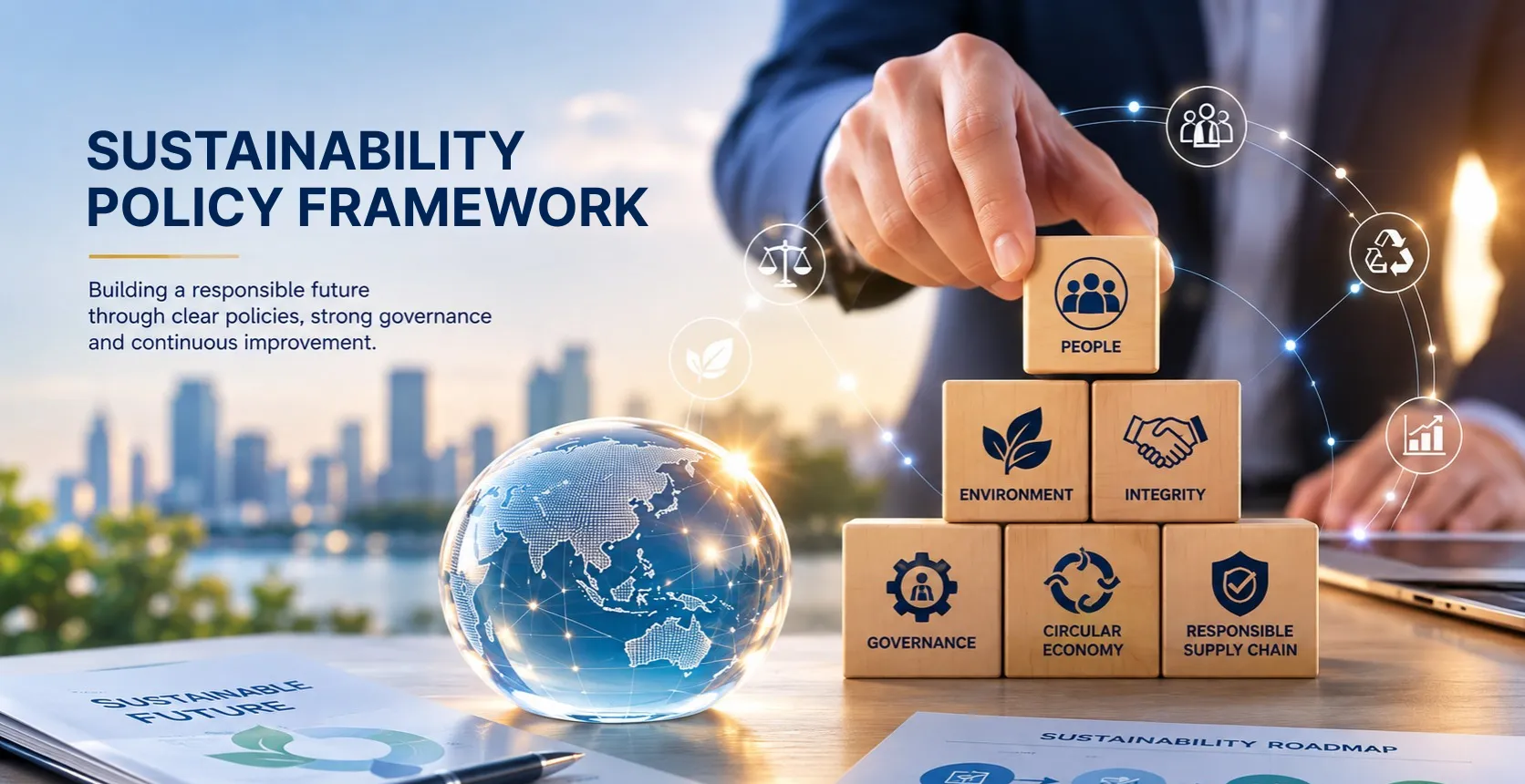
TPBI Group is committed to conducting business in accordance with sustainable development guidelines that align with corporate social responsibility principles. We aim to create stakeholder participation, trust, and value through our dedication to managing key sustainability issues across three clear dimensions: environmental, social, and economic. We focus on risk management, adaptation to change, and seeking opportunities appropriate for our business.
This policy has been cascaded to practices throughout the company and across the entire supply chain through various channels. The Board of Directors is responsible for overseeing sustainability strategy and policy through the Sustainability and Corporate Governance Committee, under the leadership of the Risk Management and Sustainability Working Group. All executives and employees have the responsibility to support, drive, integrate, and implement practices in accordance with this policy to propel the company toward operational excellence, transparency, effective response to change, and compliance with international standards and best practices, while maintaining a balance of environmental, social, and good corporate governance aspects.
The company reviews its sustainability management policy annually, considering situations, trends, directions, changes, and various internal and external sustainability factors, including relevant requirements and standard criteria, while taking into account all stakeholder groups. This is done to support the company in effectively achieving its vision, direction, strategy, and objectives, as well as responding to the Sustainable Development Goals (SDGs).
Under the leadership of the Risk Management and Sustainability Working Group, which serves as a key mechanism for overseeing the company's sustainability development to ensure serious implementation and effective execution, the operational approach according to the sustainability strategy framework can be summarized as follows:
- Monitor, measure, and evaluate the company's sustainability performance and effectiveness to establish guidelines for improving business processes that can integrate international sustainability best practices into the organizational level across both value chains and supply chains.
- Cultivate concepts, knowledge, understanding, and awareness of conducting sustainable business through various channels to executives and employees at all levels, in order to create awareness and participation throughout the organization.
Stakeholder Engagement
Stakeholder Policies and Guidelines
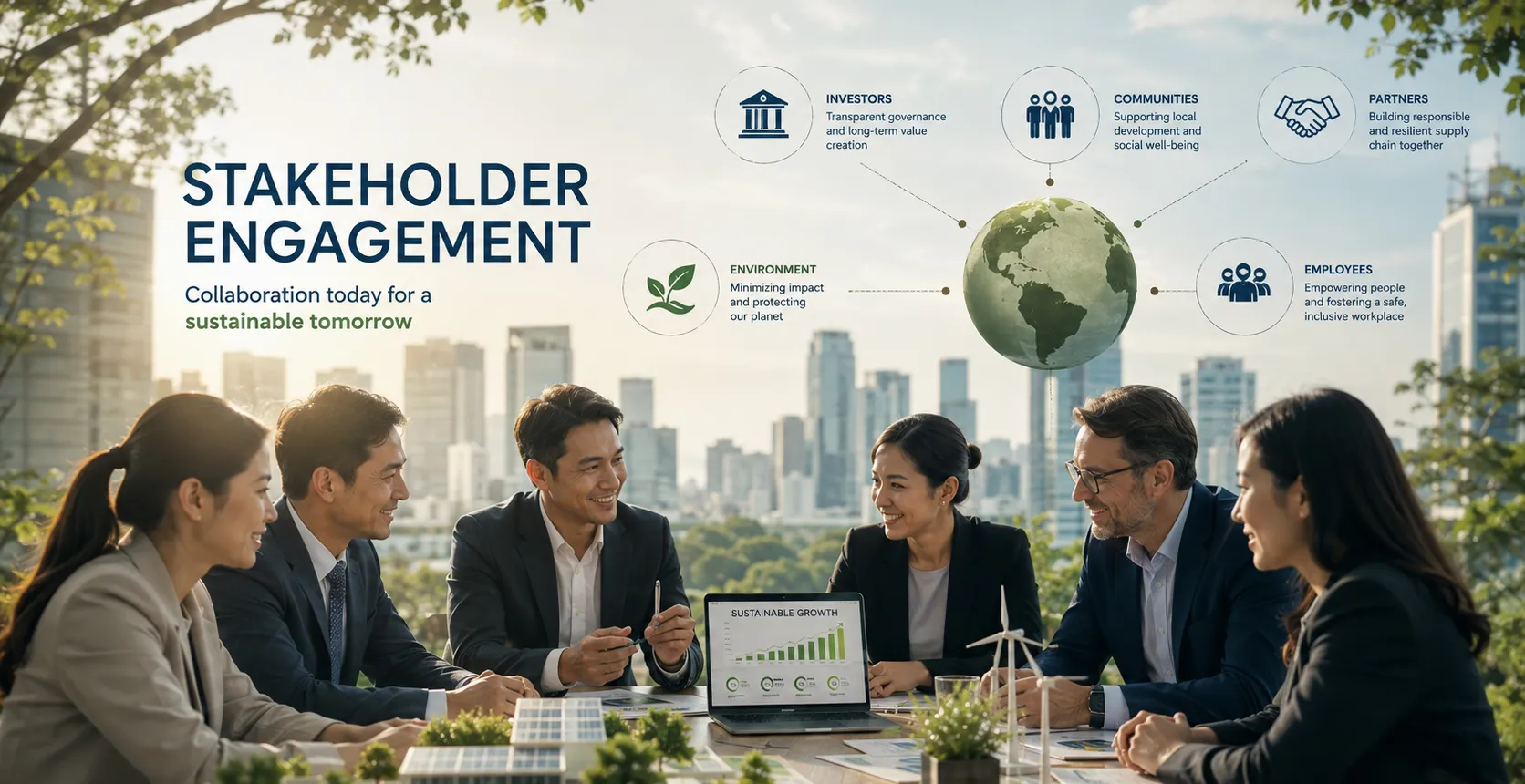
The company is committed to creating fairness and prioritizing the rights of all stakeholder groups, whether they are internal stakeholders such as shareholders and company employees, or external stakeholders such as business partners and customers. The company recognizes that support and feedback from all stakeholder groups will be beneficial for the company's operations and business development. Therefore, the company will comply with relevant laws and regulations to ensure that the rights of these stakeholders are well protected.

| Stakeholders’ expectations | Responses to stakeholder expectations | Channels for engagement and communication |
|
|
|
| Stakeholders’ expectations | Responses to stakeholder expectations | Channels for engagement and communication |
|
|
|
| Stakeholders’ expectations | Responses to stakeholder expectations | Channels for engagement and communication |
|
|
|
| Stakeholders’ expectations | Responses to stakeholder expectations | Channels for engagement and communication |
|
|
|
| Stakeholders’ expectations | Responses to stakeholder expectations | Channels for engagement and communication |
|
|
|
| Stakeholders’ expectations | Responses to stakeholder expectations | Channels for engagement and communication |
|
|
|
| Stakeholders’ expectations | Responses to stakeholder expectations | Channels for engagement and communication |
|
|
|
Human Rights Policy
The company is committed to conducting business under human rights and labor practice policies to prevent human rights violations of all stakeholder groups from business operations in the supply chain. The company establishes practices that align with the International Labour Organization Convention, the Universal Declaration of Human Rights, The United Nations Convention on the Rights of the Child and the elimination of all forms of discrimination against women, the UN Global Compact, and other relevant laws.
The Human Resources Department serves as the main function responsible for monitoring and managing human rights matters across the company. HR also serves as a member of the Risk, Sustainability, and Corporate Governance Working Committee, which oversees and coordinates human rights management across operations.
The Working Committee reports to the Sustainability and Corporate Governance Committee on a quarterly basis in case of any incidents or irregularities, and provides an annual summary report on human rights performance and any related complaints—whether occurred or not—to the Board of Directors for acknowledgment and further supervision.
We also promote business partners and key suppliers to implement comprehensive human rights operations through awareness of respect for and compliance with human rights principles, as well as human rights risk assessment. The company encourages employees to recognize the importance and understand human rights issues, and to correctly comply with human rights principles by providing annual refresher training programs.
Goals
- Zero human rights violations
- 100% of employees passed ethics and human rights testing and completed the annual knowledge review
2024 Performance Results
- Zero human rights violations
- 100% of employees passed testing and training
- 13 employees with disabilities, which meets legal requirements